Ouch, that’s hard. I hope you get through the day ok and that you’ll get a gooood night of sleep tonight.
troglodyte_mignon
Pronom : elle. | Pronouns: she, her.
- 2 Posts
- 23 Comments
Joined 2 years ago
Cake day: June 20th, 2023
You are not logged in. If you use a Fediverse account that is able to follow users, you can follow this user.
6 just after waking up. 1 several hours later, after playing some piano.
But I don’t understand what the point is of having a sheet-music-holding-monkey if you end up having to turn the pages with your own foot. Shouldn’t the monkey do it? What am I paying it for?
Also, I’d love to know the history behind picture 5: are the birds attacking the owl or cleaning it or… ?

 4·15 days ago
Thank you for the context anyway, that’s very helpful!
That makes sense, thank you. I’m guessing it’s gaming slang.
Those little feet!
What does “OP” mean in that context? I tried to find the answer but to no avail.
Yes, I can imagine the owl doesn’t feel very relaxed in the hands of Big Mammal.
The two men in the picture look so happy, ha ha.
All the comments are saying “well, no, not really” and they’re not wrong, but still, I really like that drawing!
Yep, I’ve seen it happen to a homeless lady in a train station where I worked. (Or rather, heard it happen.) And while her shouting was annoying, I’ve always felt very uncomfortable with the way the “issue” was “resolved”…
So cute, it looks like it’s wearing a little mask.
English “mites” are not called mites at all in French, they’re called acariens. (And in English, the study of mites/acariens is called “acarology”!) Since those are arachnids, they’re very different from moths/mites which are insects, but the word “mite” has the same origin in both languages.
In 1765, the Encyclopedia described mites as having either six or eight legs, and talks a lot about what seems to be the flour mite Acarus siro (which was called mite du fromage at the time but is never called a mite in modern French), so it looks like the word used to have a broader meaning in French.
We have pantry moths and clothing moths, which I don’t think I’ve ever seen in person.
I’m pretty sure I’ve seen a clothing moth’s caterpillar once.
I had just put on a dress I really liked when, looking down, I made out what I thought was a bit of white fluff hidden in one of its folds. I rubbed it to get it off the dress, and inside was some kind of worm, moving slightly. I’m usually tolerant and curious of bugs, but that one really freaked me out; I killed it right away out of pure reflex and threw it as far away as I could.
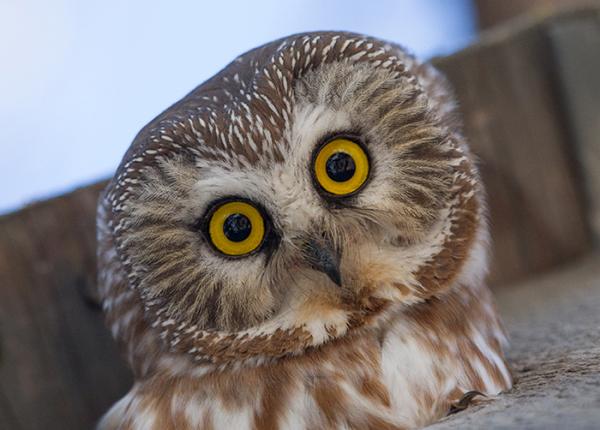
Good for them! I love their big orange eyes. :-)
Come for the cute picture, stay for the sobering and useful information.
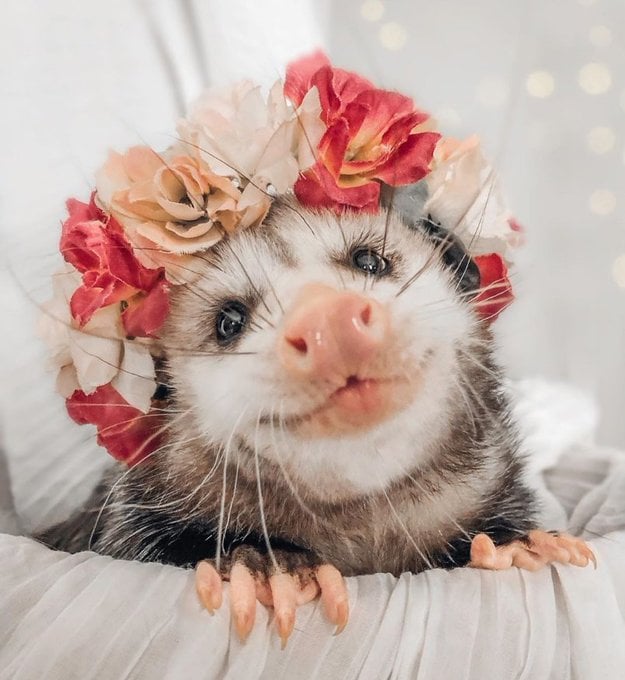
So cute. :-)
I didn’t know this species, and I love it!
 3·1 month ago
using public transport helps. At least I get to relax, play a game, knit, etc.
This is true, but only if it’s not crowded and you get to sit down. The same commute time feels completely different during rush hour and off-peak.
The picture of the owl in the window frame makes me think of a trompe-l’œil (I searched the translation for that expression, but apparently English says it in French too, funny).
I had to look in a dictionary for “stoat”, I remember hearing that word but I tend to mix up mustelids even in French so I would never trust my ability to name them correctly in English.
Here, two of our mustelids look very similar : the hermine (= stoat or ermine, Mustela erminea) and the slightly smaller belette (= weasel, Mustela nivalis). They’re easier to tell apart in winter, when the stoat gets a white coat of fur while the weasel keeps its brown back (in Western Europe, I think weasels can change colour in other places?). The fact that their American cousin Mustela richardsonii also gets a white coat in winter makes me want to call it a stoat too, but it’s not my place to tell Americans how to name their animals, ha ha.
I don’t remember ever seeing a stoat in the wild, but two times I’ve encountered a beech marten that was searching through the waste bins in my very urban street, at night. It was a good surprise even though I didn’t get to take a good look.


Is the heron (or whatever) on the left one of your collegues? :-)